

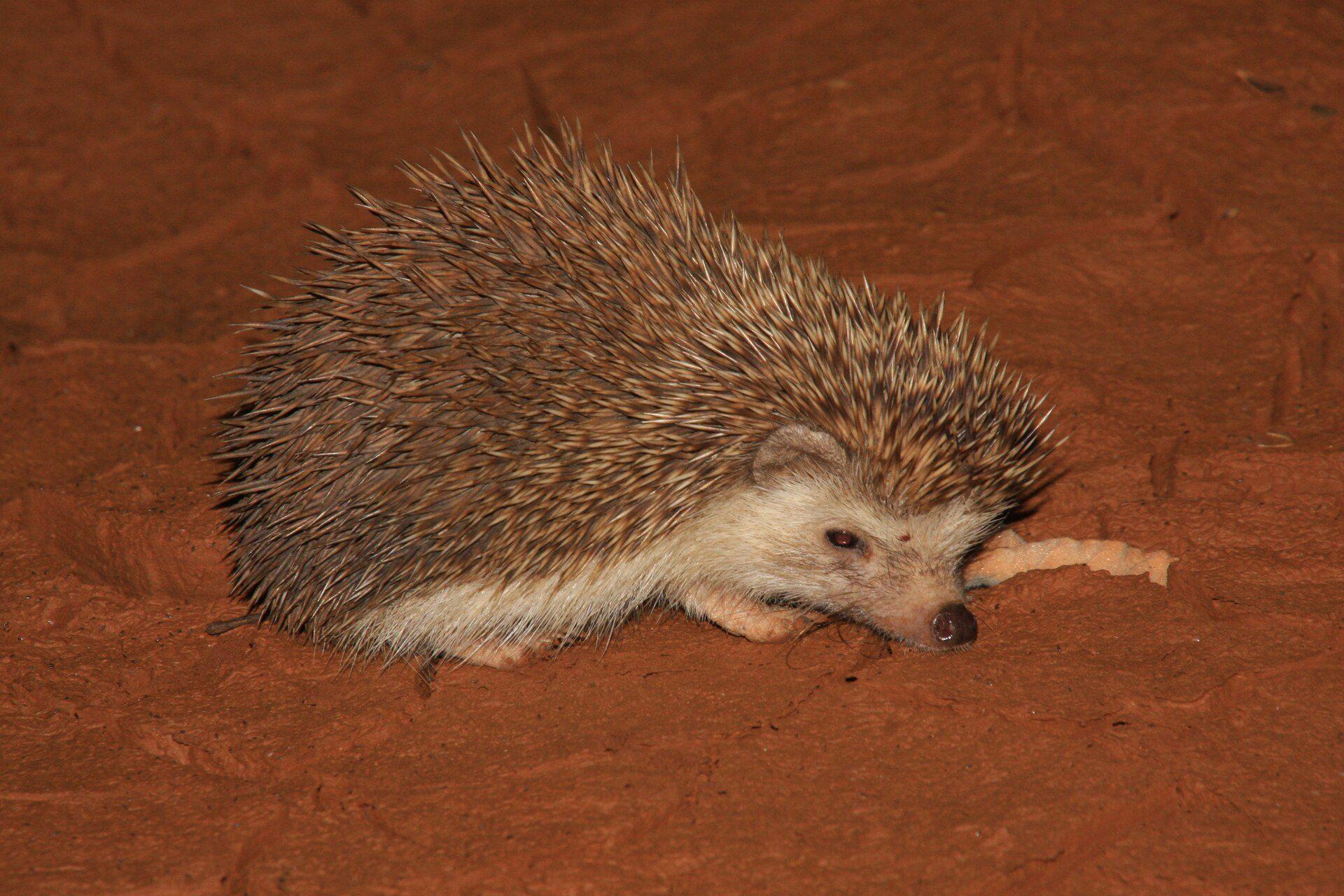
Species guideThe Wild.pet species guide
 Habitat: Savanna / Grassland
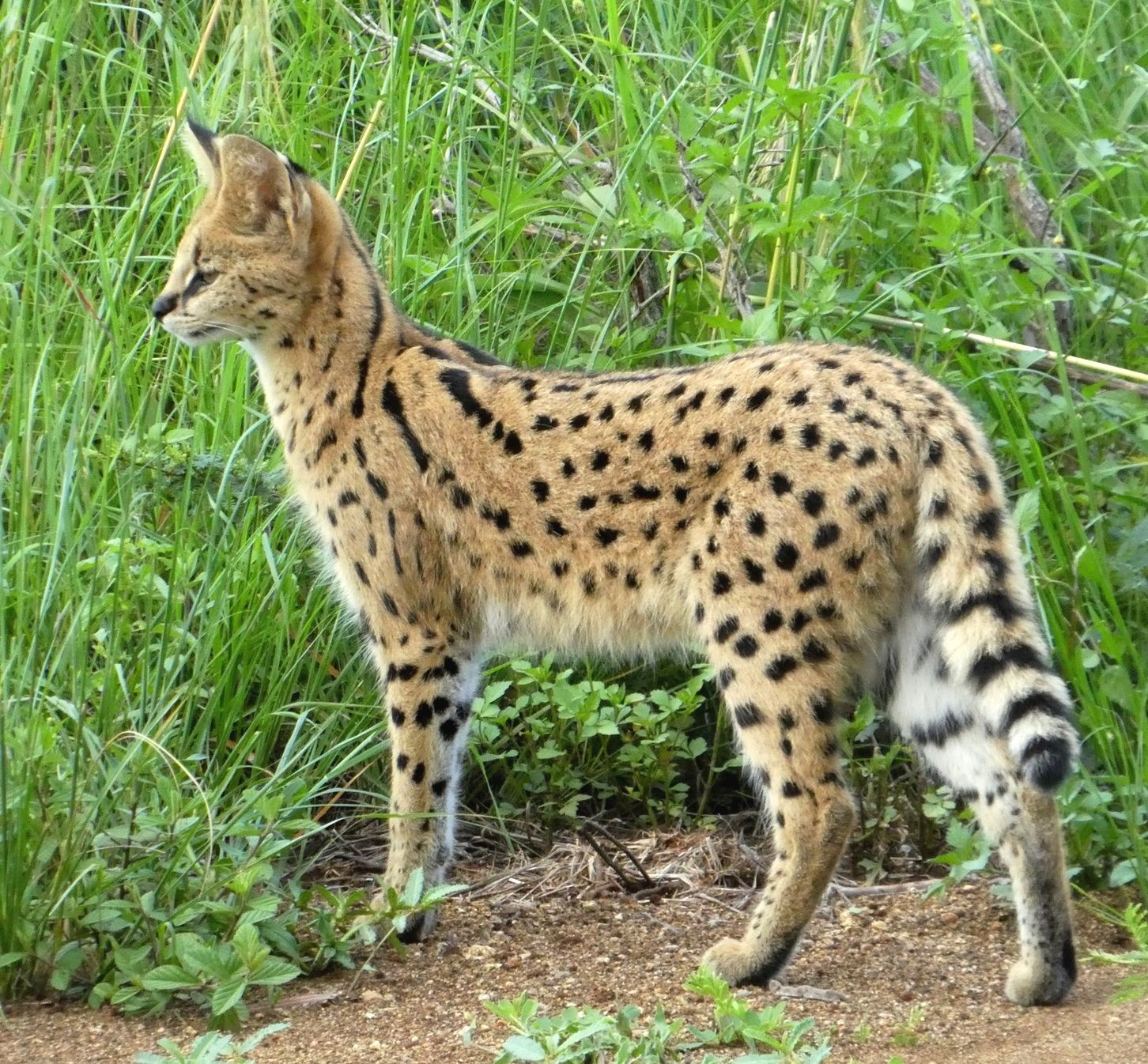
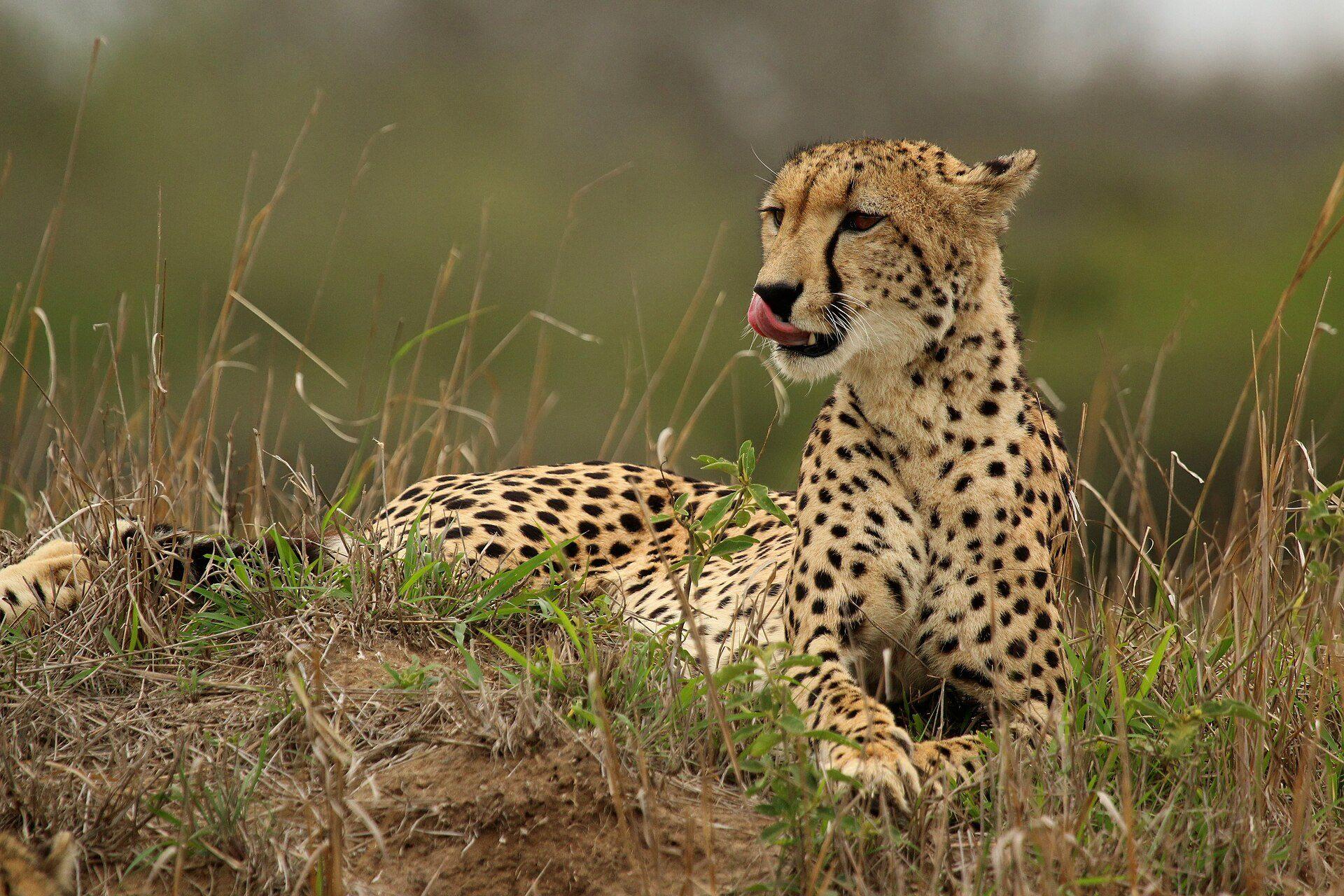
Photo: datadan, CC BY 4.0, via Wikimedia Commons (resized)
Mammal
Serval
IUCN Red List: Least concernLeptailurus serval
Long-legged. Sharp-eared. Truly wild.
A long-legged African wild cat with huge ears that listens for rodents in tall grass, then leaps to pounce.
Care & welfare
Specialist care, not domestication.
Space & enrichment
Needs a very large, tall, secure outdoor enclosure, because servals can jump and climb out of ordinary fencing. Wild and unpredictable, even when raised by people, and needs hours of enrichment every day.
Diet & veterinary care
A carnivore that needs whole prey or a carefully balanced raw diet, and a vet who treats wild cats.
A long-term responsibility
Servals in zoos have a median life expectancy of about 13 to 14 years, and some live past 20. That is a long time to provide space, whole prey and specialist vet care.
Know your state’s rules
Serval · Private pet ownership · 5 states researched
- CaliforniaIllegalpi.cdfa.ca.gov · Cal. Code Regs. tit. 14, §§ 671(c), 671.1 (official source for California)
- FloridaPermit requiredmyfwc.com · Fla. Admin. Code r. 68A-6.002(1)(b) (official source for Florida)
- MaineRestrictedmaine.gov · 09-137 C.M.R. ch. 7, §§ 7.06(3)(A), 7.18(2)(F) (official source for Maine)
- New YorkIllegalnysenate.gov · N.Y. Envtl. Conserv. Law §§ 11-0103(6)(e), 11-0512 (official source for New York)
- TexasPermit requiredstatutes.capitol.texas.gov · Tex. Health & Safety Code §§ 822.101(2)(J), 822.103, 822.107 (official source for Texas)
City and county rules may be stricter. Contact your state wildlife agency before acquiring an animal. Never take wildlife from the wild.
Overview, not legal advice · Checked Nov 15, 2026
Pet suitability
Specialist facility onlyOverall difficulty: 4.1 out of 5 (higher is harder). How we rate
- Care difficulty4 out of 5
- Specialist knowledge; mistakes are serious
- Daily time and attention5 out of 5
- Hours every day; constant social needs
- Space5 out of 5
- Acres of land
- Environment3 out of 5
- Moderate
- Diet4 out of 5
- Complex, specialised or hard to source
- Vet care4 out of 5
- Very few specialist vets exist
- Danger4 out of 5
- Can seriously injure people
- Lifespan commitment4 out of 5
- Decades; may outlive its owner
- Yearly cost4 out of 5
- Very high
- Welfare in captivity4 out of 5
- Suffers outside the wild
Compare with another animalBefore you get one
Where it belongs
Scientists sort living things into groups inside groups. Here’s the serval’s place, from the biggest group to its own species.
- KingdomAnimalia · animals
- PhylumChordata · animals with a backbone or a rod like one
- ClassMammalia · mammals
- OrderCarnivora · carnivores
- FamilyFelidae · cats
- GenusLeptailurus · serval (the only species in its genus)
- SpeciesLeptailurus serval · serval
Checked Nov 15, 2026 against ITIS report: Leptailurus serval (TSN 552766) and Animal Diversity Web: Leptailurus serval.
Quick facts
- Type
- Mammal
- Weight
- 9–18 kg
- Lifespan
- Median 13–14 years in zoos; some pass 20
Fun fact: A serval can leap high into the air to catch birds in flight.
Where it lives in the wild
- Africa (Central Africa, East Africa, North Africa, Southern Africa, West Africa)
Conservation
IUCN Red List: Least Concern. This species is not currently threatened with extinction. International trade: CITES Appendix II: international trade needs permits.
Common in many areas, but servals depend on wetlands, which are being lost. In North Africa the serval is very rare.
Before you get one
Check each need honestly before you decide. Scores run from 1 to 5; higher is harder.
Space
5 out of 51 is a tank or small enclosure; 5 is acres of land.
Read about space and enrichmentDiet
4 out of 51 is simple, easy to buy; 5 is complex, specialised or hard to source.
Read about diet and veterinary careVet care
4 out of 51 is most vets can help; 5 is very few specialist vets exist.
Read about diet and veterinary careDaily time and attention
5 out of 51 is a few minutes a day; 5 is hours every day; constant social needs.
See the pet suitability scoresLifespan commitment
4 out of 51 is a few years; 5 is decades; may outlive its owner.
Median 13–14 years in zoos; some pass 20
See the quick factsIs it legal where you live?
Pick your state in “Is it legal where I live?” to see the rule that applies there.
Is it legal where I live?
This is general guidance, not legal advice. Laws change, and cities and counties can add their own rules. Before getting any animal, check with your state wildlife agency, and if you're under 18, talk to a grown-up first.
Pick a state to see what applies there. Your choice stays on this device.
We haven't found a US federal rule about keeping this animal.
State rules
Researched so far in 5 of the 50 states and DC. Everywhere else shows “not yet researched”: that never means legal.
- Permit requiredFlorida· Keeping one
Florida lists servals as Class II wildlife. Keeping one as a pet needs a yearly Class II personal-use permit ($140 at the time of checking), which requires being 18 or older, 1,000 hours of documented experience, references and a caging inspection.
Fla. Admin. Code r. 68A-6.002(1)(b); § 379.3762, Fla. Stat. · Wildlife as a Personal Pet (Florida Fish and Wildlife Conservation Commission) · also Fla. Admin. Code r. 68A-6.002, Classes of Captive Wildlife (Cornell Legal Information Institute) · checked 2026-11-15
- Permit requiredTexas· Keeping one
Texas lists the serval as a dangerous wild animal. Keeping one requires a certificate of registration from local animal control, plus liability insurance, and cities and counties can ban them outright.
Tex. Health & Safety Code §§ 822.101(2)(J), 822.103, 822.107 · Texas Health and Safety Code ch. 822, subch. E (dangerous wild animals) · also Texas dangerous wild animals law, H&S Code §§ 822.101–116 (Animal Legal & Historical Center) · checked 2026-11-15
- IllegalCalifornia· Keeping one · applies to all wild cats (family felidae)
California lists every wild cat species as a restricted animal. Restricted animals can only be kept with a state permit, and permits aren't issued for pets.
Cal. Code Regs. tit. 14, §§ 671(c), 671.1 · 14 CCR 671 restricted wild animal list (California Department of Food and Agriculture copy) · also Cal. Code Regs. tit. 14, § 671 (Cornell Legal Information Institute) · checked 2026-11-15
- RestrictedMaine· Keeping one · applies to all wild cats (family felidae)
Maine lists every wild cat species (family Felidae) as a Category 1 Restricted Species. Only exhibitors, wildlife rehabilitators, registered labs and accredited research facilities can get a permit for Category 1 animals, so they can't be kept as pets.
09-137 C.M.R. ch. 7, §§ 7.06(3)(A), 7.18(2)(F) · 09-137 C.M.R. ch. 7, Rules for Importation, Possession, Propagation, Rehabilitation and Exhibition of Wildlife (Maine Secretary of State, official text, amended 2021) · also 09-137 C.M.R. ch. 7, § 18, Species Lists (Cornell Legal Information Institute) · checked 2026-11-15
- IllegalNew York· Keeping one · applies to all wild cats (family felidae)
New York bans keeping wild animals as pets, and its definition of wild animal includes every wild cat species and their hybrids (only domestic cats are excluded).
N.Y. Envtl. Conserv. Law §§ 11-0103(6)(e), 11-0512 · N.Y. Environmental Conservation Law § 11-0103 (definitions) · also N.Y. Environmental Conservation Law § 11-0103 text and summary (Animal Legal & Historical Center) · checked 2026-11-15
Protect the habitat. Respect the serval.
Keep a respectful distance. Never feed wildlife. Support local habitat restoration.
Check ownership lawsAnimals that share its home

Sources
- San Diego Zoo Wildlife Alliance: Serval fact sheet (accessed 2026-11-15)
- Felidae Conservation Fund: Serval (accessed 2026-11-15)
- Panthera: Small Cat Spotlight, Serval (accessed 2026-11-15)
- ABQ BioPark: A peaceful goodbye to 22-year-old serval Savanna (2024) (accessed 2026-11-15)
- San Diego Zoo Wildlife Alliance: Serval fact sheet, reproduction (accessed 2026-11-15)
Pet suitability scores are Wild.pet's own judgments. See how we rate.