

Species guideThe Wild.pet species guide
 Habitat: Forest / Wetland
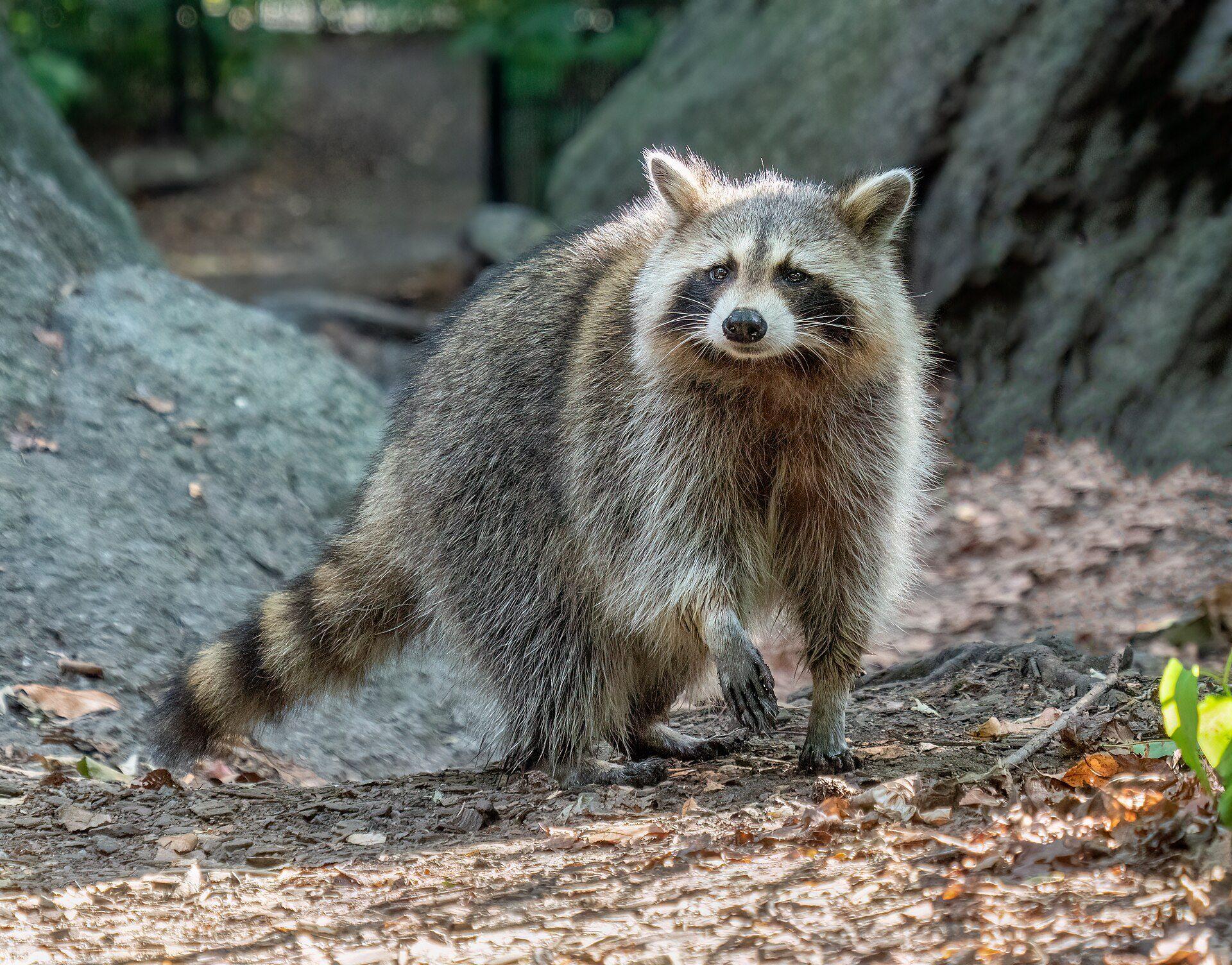
Photo: Rhododendrites, CC BY-SA 4.0, via Wikimedia Commons (resized)
Mammal
Raccoon
IUCN Red List: Least concernProcyon lotor
Masked. Clever. Wild at heart.
A masked, ring-tailed mammal from North and Central America that feels for food with its nimble front paws.
Care & welfare
Specialist care, not domestication.
Space & enrichment
Needs a large, secure outdoor enclosure with climbing structures and water. Raccoons are clever escape artists that open doors and wreck homes.
Diet & veterinary care
An omnivore that eats fruit, nuts, insects, crayfish and small animals. Raccoons can carry rabies and roundworm, which put people and other pets at risk.
A long-term responsibility
Raccoons can live up to about 20 years in captivity, although wild ones usually live only 2 to 3 years. Never release a pet raccoon: it is how they became invasive in Europe and Japan.
Know your state’s rules
Raccoon · Private pet ownership · 0 states researched
We haven’t researched any state’s law for this animal yet. That never means it’s legal.
City and county rules may be stricter. Contact your state wildlife agency before acquiring an animal. Never take wildlife from the wild.
Overview, not legal advice
Pet suitability
Specialist facility onlyOverall difficulty: 3.7 out of 5 (higher is harder). How we rate
- Care difficulty4 out of 5
- Specialist knowledge; mistakes are serious
- Daily time and attention4 out of 5
- Hours every day; constant social needs
- Space4 out of 5
- Acres of land
- Environment3 out of 5
- Moderate
- Diet3 out of 5
- Moderate
- Vet care4 out of 5
- Very few specialist vets exist
- Danger4 out of 5
- Can seriously injure people
- Lifespan commitment3 out of 5
- Moderate
- Yearly cost3 out of 5
- Moderate
- Welfare in captivity4 out of 5
- Suffers outside the wild
Compare with another animalBefore you get one
Where it belongs
Scientists sort living things into groups inside groups. Here’s the raccoon’s place, from the biggest group to its own species.
- KingdomAnimalia · animals
- PhylumChordata · animals with a backbone or a rod like one
- ClassMammalia · mammals
- OrderCarnivora · carnivores
- FamilyProcyonidae · raccoons, coatis and relatives
- GenusProcyon · raccoons
- SpeciesProcyon lotor · raccoon
Checked Nov 15, 2026 against ITIS report: Procyon lotor (TSN 180575) and PBS Nature: Raccoon fact sheet.
Quick facts
- Type
- Mammal
- Weight
- About 2–10 kg
- Lifespan
- Up to about 20 years in captivity
Fun fact: The "lotor" in its scientific name means "washer", because raccoons seem to wash their food.
Where it lives in the wild
- North America (Canada, Mexico and Central America, United States)
Introduced by people to: East Asia, Europe
Conservation
IUCN Red List: Least Concern. This species is not currently threatened with extinction. It is not listed by CITES, the treaty that controls international wildlife trade.
Common and spreading. In Europe and Japan, where escaped and released pets started wild populations, raccoons are an invasive species.
Before you get one
Check each need honestly before you decide. Scores run from 1 to 5; higher is harder.
Space
4 out of 51 is a tank or small enclosure; 5 is acres of land.
Read about space and enrichmentDiet
3 out of 51 is simple, easy to buy; 5 is complex, specialised or hard to source.
Read about diet and veterinary careVet care
4 out of 51 is most vets can help; 5 is very few specialist vets exist.
Read about diet and veterinary careDaily time and attention
4 out of 51 is a few minutes a day; 5 is hours every day; constant social needs.
See the pet suitability scoresLifespan commitment
3 out of 51 is a few years; 5 is decades; may outlive its owner.
Up to about 20 years in captivity
See the quick factsIs it legal where you live?
Pick your state in “Is it legal where I live?” to see the rule that applies there.
Is it legal where I live?
This is general guidance, not legal advice. Laws change, and cities and counties can add their own rules. Before getting any animal, check with your state wildlife agency, and if you're under 18, talk to a grown-up first.
Pick a state to see what applies there. Your choice stays on this device.
We haven't found a US federal rule about keeping this animal.
State rules
Researched so far in 0 of the 50 states and DC. Everywhere else shows “not yet researched”: that never means legal.
Protect the habitat. Respect the raccoon.
Keep a respectful distance. Never feed wildlife. Support local habitat restoration.
Check ownership lawsAnimals that share its home

Sources
- European Environment Agency (EUNIS): Procyon lotor (accessed 2026-11-15)
- Minnesota Seasons: Common raccoon (accessed 2026-11-15)
- Factanimal: Raccoon facts (accessed 2026-11-15)
- Zoo d'Amnéville: Raccoon (accessed 2026-11-15)
- PBS Nature: Raccoon fact sheet (accessed 2026-11-15)
- The Canadian Encyclopedia: Raccoon (accessed 2026-11-15)
- Encyclopedia of Life: Procyon lotor (accessed 2026-11-15)
- Havahart: Raccoon facts (accessed 2026-11-15)
Pet suitability scores are Wild.pet's own judgments. See how we rate.